13 Results for "

Thermopsis lanceolala R.Br.

" in MedChemExpress (MCE) Product Catalog:
Products (13)

13 Results for "Thermopsis lanceolala R.Br." in MCE Product Catalog:

Cat. No.: HY-N8263
CAS No.: 55486-06-1
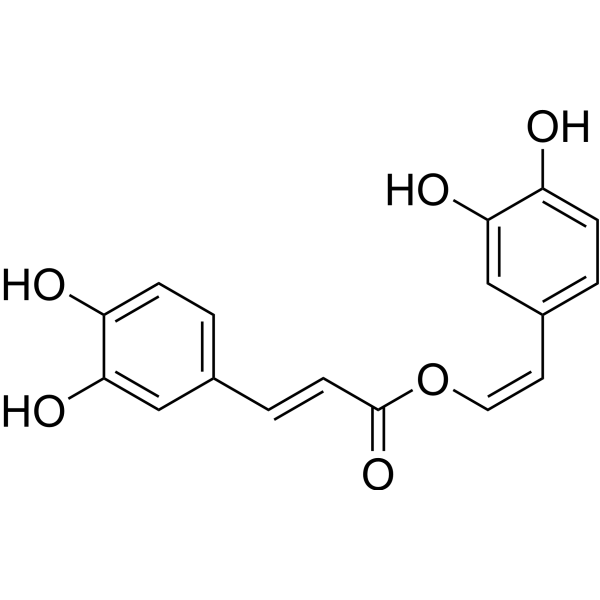
Nepetoidin B, an anti-inflammatory agent, inhibits inflammation by modulating the NF-κB and Nrf2/HO-1 signaling pathways. Nepetoidin B also has antifungal and antibacterial activity. Nepetoidin B is a natural product that can be obtained from Salvia plebeia R. Br. Nepetoidin B can be used in anti-inflammatory and anti-infectious research .
Cat. No.: HY-N2273
CAS No.: 19942-02-0
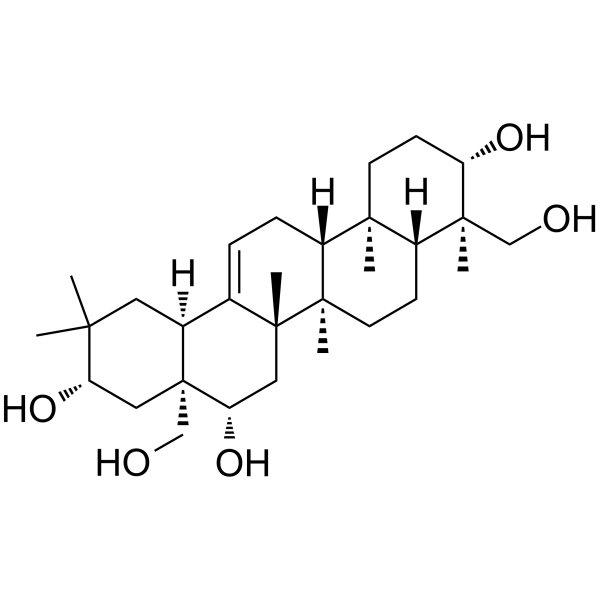
Gymnestrogenin is a pentahydroxytriterpene from the leaves of Gymnema sylvestre R.Br . Gymnestrogenin is a LXR antagonist with IC50s of 2.5 and 1.4 μM for LXRα and LXRβ transactivation, respectively. Gymnestrogenin reduces the transcriptional activity of LXR even on its own promoter, thus reducing the mRNA expression .
Cat. No.: HY-125545
CAS No.: 143502-52-7
Cynanester A is a active product that can be isolated from Cynanchum chinense R. Br. .
Cat. No.: HY-N12306
CAS No.: 1627598-00-8
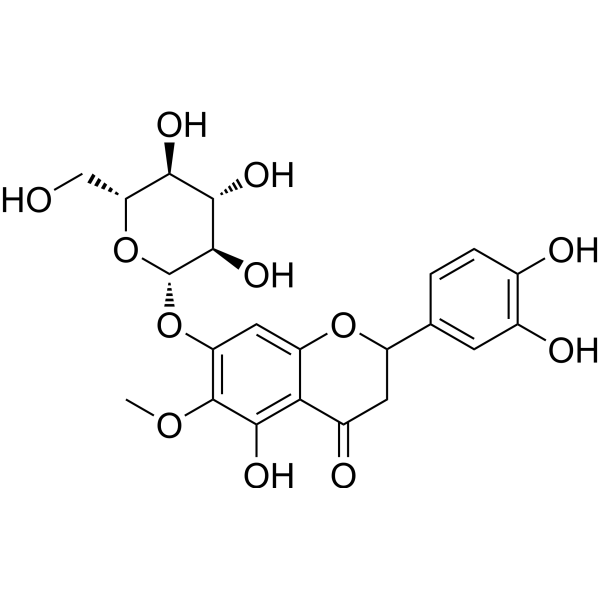
5,7,3',4'-Tetrahydroxy-6-methoxyflavanone-7-glucoside (compound4) can be isolated from the Salvia plebeia R.Br .
Cat. No.: HY-N10644
CAS No.: 142449-94-3
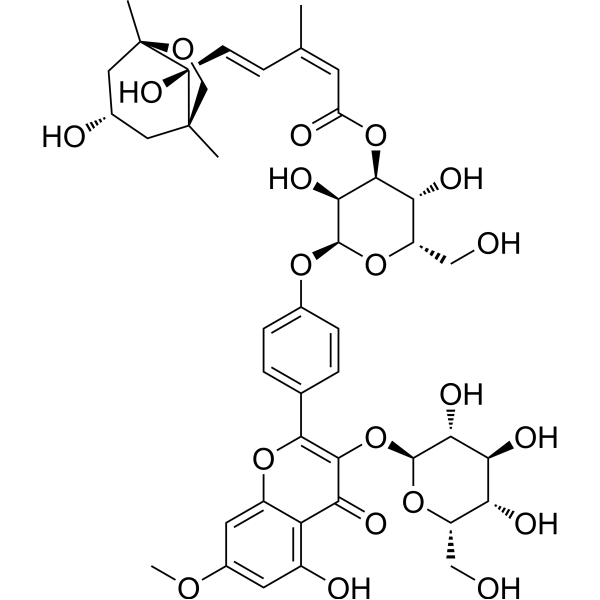
Complanatin is an acylated flavonol glycoside, it can be isolated from Astragalus complanatus R. Br .
Cat. No.: HY-N12567
CAS No.: 899430-07-0
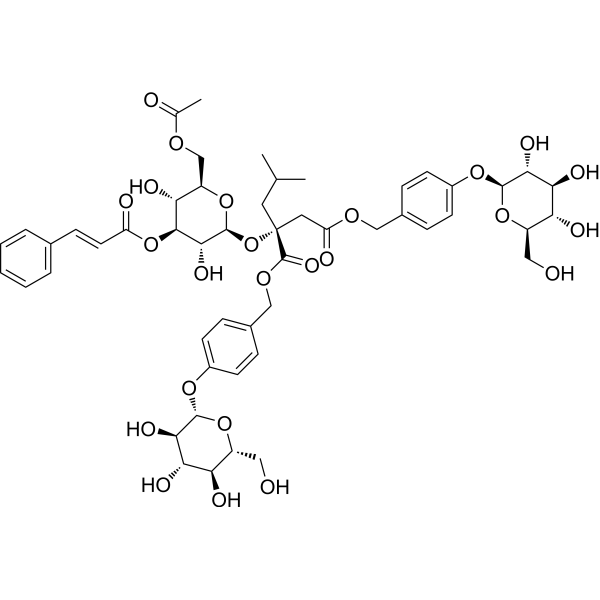
Gymnoside VII is a glycosyloxybenzyl 2-isobutyl malate compound that can be isolated from Gymnadenia conopsea R. Br. and can be used in anti-allergy studies .
Cat. No.: HY-N11775
CAS No.: 1934299-51-0
Synonyms: Plebeiolide D
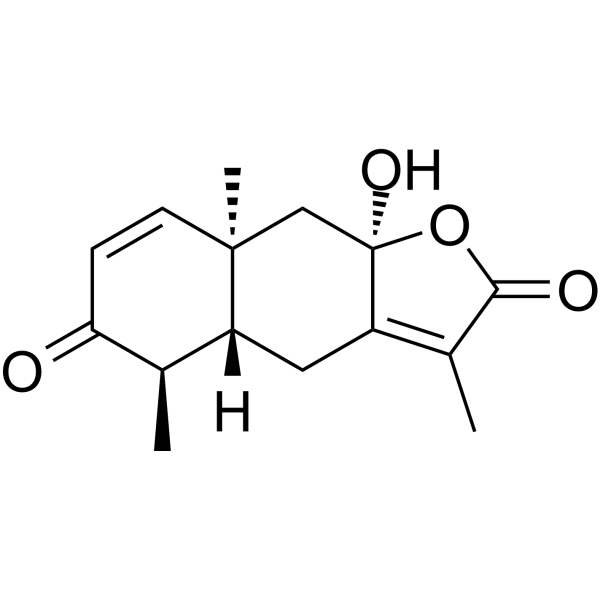
Eudebeiolide B is a compound that can be isolated from Salvia plebeia R. Br. Eudebeiolide B inhibits osteoclastogenesis by regulating RANKL-induced NF-κB, c-Fos and calcium signaling. Eudebeiolide B can be used for osteoclast-related diseases research .
Cat. No.: HY-117733
CAS No.: 176050-48-9
Zerumin A is an anti-angiogenic agent that acts on multiple molecular targets related to angiogenesis (including kdr/VEGFR2, angpt1, angpt2, tie1, and tie2). Zerumin A specifically inhibits the proliferation and migration of human umbilical vein endothelial cells (HUVECs) by regulating the VEGF-VEGFR and ANGPT-TIE signaling pathways, and dose-dependently inhibits angiogenesis (10-20 μM significantly inhibits zebrafish embryo angiogenesis). Zerumin A can be used in the research of cancer and angiogenesis-related inflammatory diseases. Zerumin A can be naturally extracted from the 95% ethanol extract of the fruits, seeds, and pericarp of Alpinia caerulea (R.Br.) Bentham (a plant of the Alpinia genus in the Zingiberaceae family) .
Cat. No.: HY-N18002
CAS No.: 949148-43-0
3-O-Methylellagic acid 4-O-β-D-glucopyranoside is an ellagic acid derivative found in the root bark of Anisophyllea dichostyla R. Br .
Cat. No.: HY-N17772
CAS No.: 899430-06-9
Gymnoside VI is a glucosyloxybenzyl 2-isobutylmalate compound that regulates allergy-related pathways. Gymnoside VI can be used in the study of diseases such as asthma, neurasthenia, and chronic hepatitis. Gymnoside VI can be isolated from the tubers of the orchid Gymnadenia conopsea R. Br.
Cat. No.: HY-P702810
Purity:  ≥ 90%, as determined by reducing SDS-PAGE.
Synonyms: E3 ubiquitin-protein ligase parkin; Parkin; PARK2; Parkin RBR E3 ubiquitin-protein ligase
Species:  
Source:  
Cat. No.: HY-P702806
Purity:  ≥ 95%, as determined by reducing SDS-PAGE.
Synonyms: E3 ubiquitin-protein ligase parkin; Parkin; PARK2; Parkin RBR E3 ubiquitin-protein ligase
Species:  
Source:  
Cat. No.: HY-P702807
Purity:  ≥ 90%, as determined by reducing SDS-PAGE.
Synonyms: E3 ubiquitin-protein ligase parkin; Parkin; PARK2; Parkin RBR E3 ubiquitin-protein ligase
Species:  
Source:  
  • 1

